
Changing Stories and Finding my Wild Self
on walking The Wild Story Path

The world is drowning in opinions, and we are listening to the wrong voices. We listen to the politicians and the news anchors and the opinions of people who scream simply to be heard. The large voices tell us how to interpret the world. The small voices tell us story. It’s time we listen to the small voices for there is much wisdom there. The smallest voices of all, the ones without a true voice at all, are actually the ones we should most listen to. These are the voices of nature.
Wild. It’s a word that has been with me for decades although I haven’t quite known what to make of it. All I knew was it was part of my story. The importance of story has also been with me for my life.
“There are no truths. Only stories.”
― Thomas King, Green Grass, Running Water
“you have to be careful with the stories you tell. And you have to watch out for the stories that you are told.”
― Thomas King, The Truth About Stories: A Native Narrative
Since my last essay Books That I Feel I am Supposed to Love but Don’t, I have spent a lot of time with Wendell Berry trying to dissect my boredom with words that should excite me. It took quite the personal deep dive to do so. My mind can go in some deep, deep weird areas and I went so far down into existential crisis with this essay I felt like Derek Zoolander looking into a puddle and asking, “Who am I?”
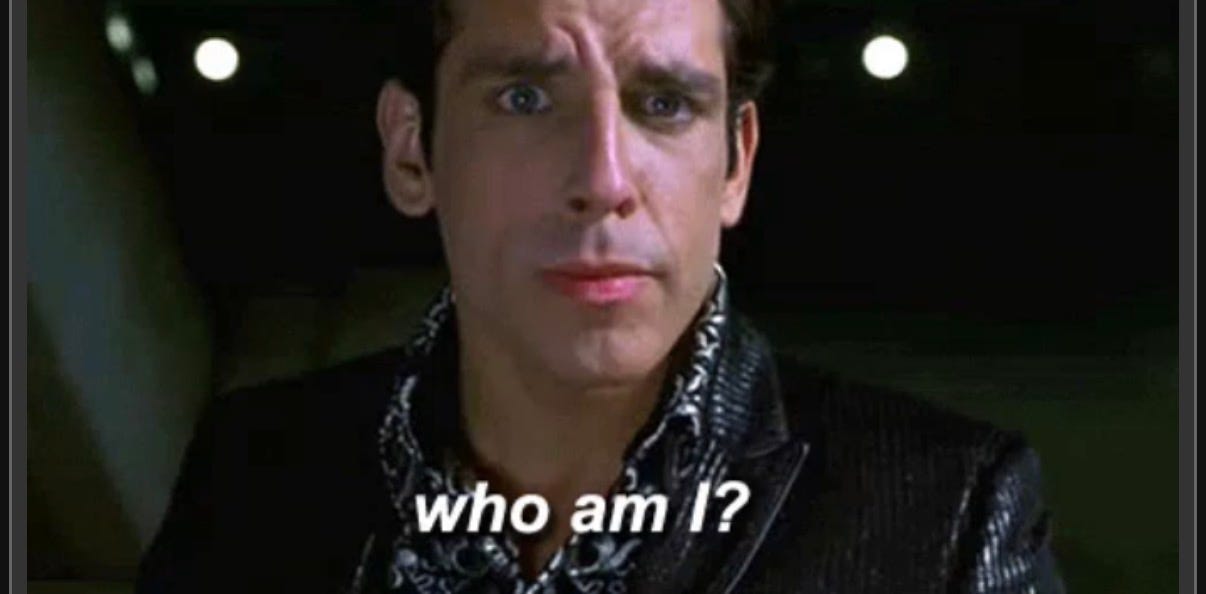
I came to the conclusion that it’s not Wendell Berry, it’s me, it’s my story and being tired of being told what my story is and needing to tell my own wild story out loud.
I have sat with this essay for over a month, this is how it originally started…
Maybe the world would be a perfect place if all of us had no desires other than walking behind the plow of a horse. Maybe all the troubles of the world would magically disappear if we simply moved America backwards in time to an idyllic pastoral view of perfection that lives in one man’s head. Or maybe it’s time to recognize the problems that do bereft the world and move forwards, not backwards, to create a world in harmony with nature that everyone can enjoy. Emphasis on the word everyone.
It boils down to the fact that Wendell Berry does not speak for me. If anything, I view him as an old white boomer, the same generation who I feel great harm from and have spent most of my life healing from.
To continue the college story that I started in my last bookish essay: I dropped out of Lewis & Clark College in the spring term of my sophomore year. I told myself (and my parents) that I would return there in the fall, but the truth was that I was deeply unhappy although deeply unhappy is an understatement and I was actually drowning in a world I did not belong in. My perfect sister graduated with a chemistry degree from L&C, and it was expected that I follow in her footsteps. I really wanted to be a biology major so in order to make my father happy I became a bio-chem major instead. I had no one to mentor me, no one to protect me from burnout, only people standing there telling me I wasn’t good enough. My first year in college I took 19 credits a term and moved to 21 credits a term my sophomore year. I was surrounded by privilege and partying, and I did not understand my burnout at the time. Everyone else seemed to be there putting little effort in their college and here I was flunking organic chemistry and crying myself to sleep every night.
But what does this have to do with Wendell Berry? Read on.
We usually don’t choose our triggers; we just deal with them as they come up.
I transferred to the University of Oregon to major in environmental science. I still remember the day I told my father this news. No daughter of his was going to go to a state school (said with spitting hatred), he’s an important businessman and he has a reputation to uphold. The yelling, the demeaning, the blaming, the yelling, the humiliation: it was awful and it’s burned in my memory. I largely don’t remember my childhood, but I remember this.
In my brief time between Lewis & Clark and University of Oregon I was a waitress at a dude ranch in Yamhill, Oregon where loggers came in twice a day to eat. One of the most striking things about this was I learned that they consider themselves environmentalists and they took pride in working outside.
What? I was the environmentalist, how could these dirty guys in their corks and cut off hems consider themselves environmentalists when they cut down trees for a living? But these people were real and treated me like a human, something I did not get from the fake business world of my father. I grew accustomed to the loggers. I didn’t agree with everything they said, but they were real and their lives were tied to the land that they truly loved.
Wendell Berry talks and people listen and this is born from a privilege that comes from being an old white guy who was a Harvard professor and got a Guggenheim. Yes, he is very intelligent, well educated, a poetic writer, and I probably should offer him more respect than I do. But Havard and a Guggenheim fellowship represent to me the world I desperately needed to escape. Even if Wendell Berry writes the opposite, he very much represents what tried to suffocate me. You could argue that he left that world and I will counter that the size of voice he has is because he still lives in it.
I have concluded that I don’t have to like Wendell Berry’s essays. In my head I associate him with a world that needs to die, a story that needs to stop. No argument, not even his own words, will convince me otherwise. I am ready for new voices in the back to the land, agrarian, or outdoor world. I enjoy the small voices from people who have seen hardship and talk about the negative but revel in the positive. I enjoy hearing the voice of people who have risen from abuse or struggled under abject poverty. The people who are so tied to the land they can’t leave. These are points of view that aren’t often talked about and are covered up when they don’t fit the dominate narrative.
Also, while I agree with Wendell Berry in so many things, since it’s coming from me, someone who isn’t a Harvard person, it somehow doesn’t count and my birth family likes to remind me of that fact. I have been called stupid to my face because I only have a B.S. degree and I don’t drive a BMW or am employed as a knowledge worker. If I were smart I would be a knowledge worker like all the other smart people. In the end, it isn’t about Wendell Berry or his message; it’s about me and the healing I need to do.
Yes, I have something personal against BMW drivers- I will be sure to publish the essay I wrote simply convince myself that I am an okay person even though I don’t drive a BMW.
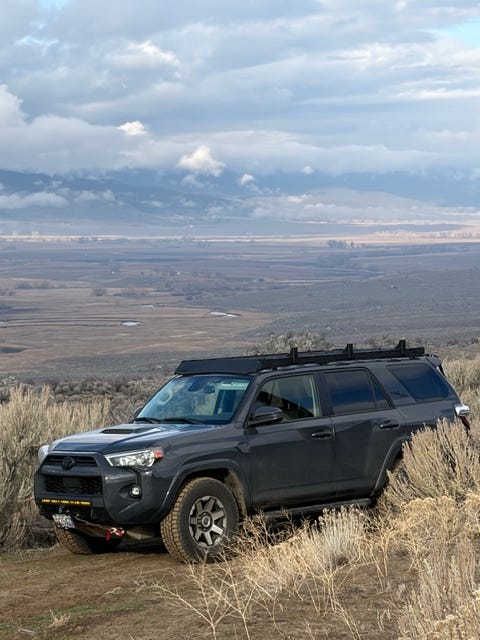
I realize these words are my opinion about not an author but rather a set of stories that I have been sold, and I will never claim that anyone else needs to share my opinions. I don’t believe in telling other people how to think or live because we are all on our own path carrying our own stories. I carry deep distrust for people who say, “this is how it is” or “this is how it should be,” full stop. All I am going to say is, “this is how it is for me and maybe someone will resonate with these words.”
FWIW, in my prior essay I also talked about how I found Braiding Sweetgrass fundamentally unreadable. I was happily surprised to see a whole r/unpopular opinion thread titled “Braiding Sweetgrass is a pretentious book.” Someone mentioned in that discussion that books like this can seem patronizing if you already have held that worldview for a while and have investigated the nuances. I truly think this is another reason I do not enjoy these books.
Wild Story
Wild is word that has been with me for decades although I haven’t quite known what to make of it. All I knew was it was part of my story. Slogging through my dislike of Braiding Sweetgrass or boredom with Wendell Berry, as well as a random person’s internet comment on reddit, has led me to clarity in my own life.
I am not all farming, homesteading, and sheep although to many that is what my life looks like. I run Mossygoat Farm, home to Wild Wisdom Wool.
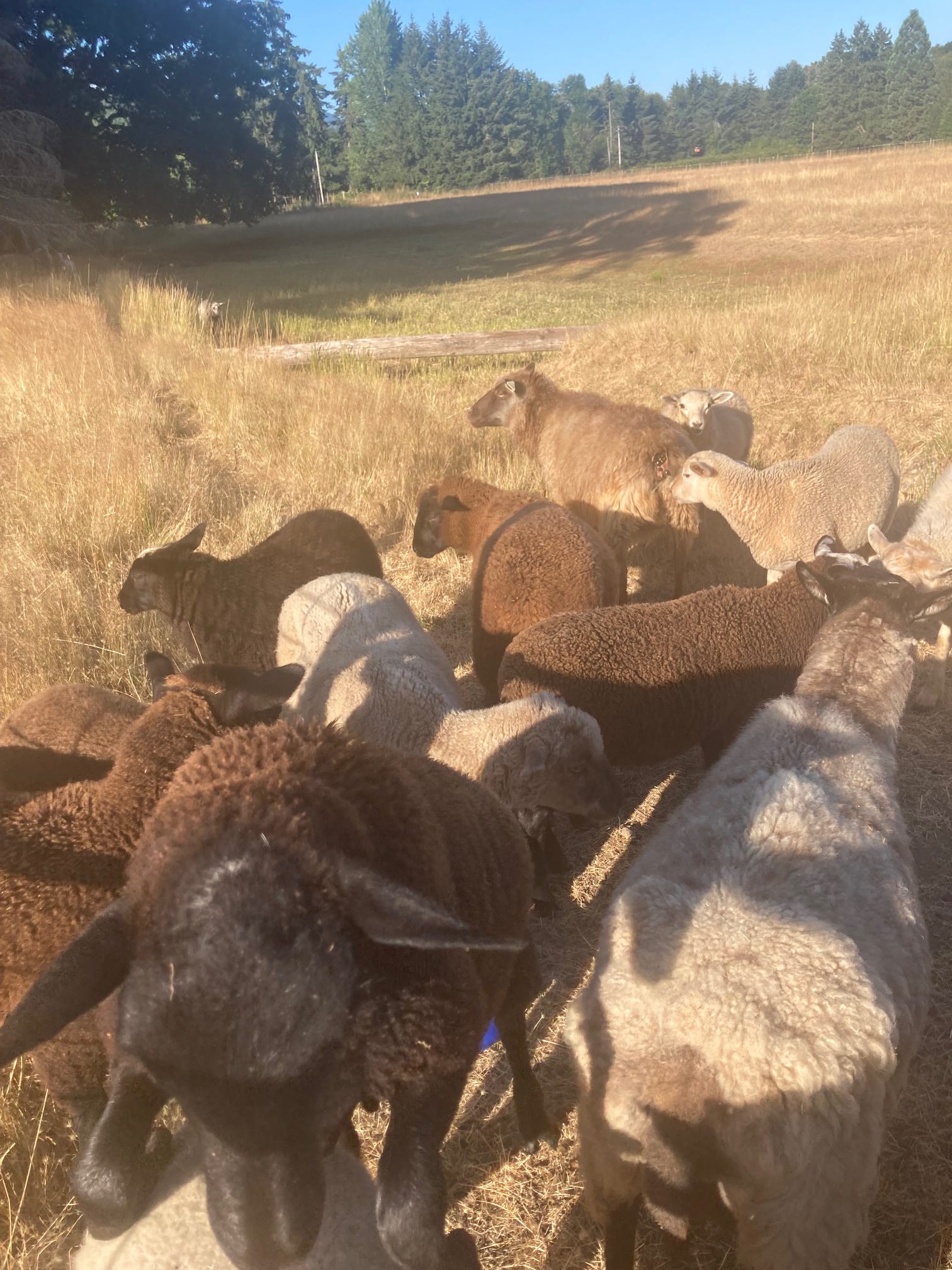
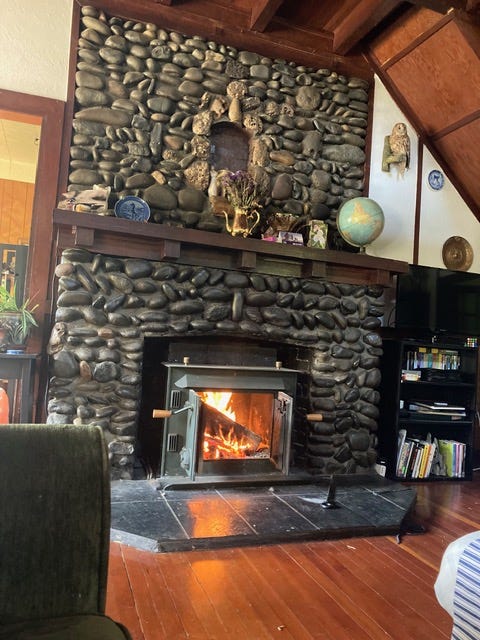
I believe in hearth keeping and home making but who am I to tell someone else how to make a home? My house is probably dusty and cluttered although I do try to keep it clean and ordered. The internet has reduced home making to cleaning a house and cooking meals when in reality it’s far more spiritual than that. Homemaking is about finding and caring for your true self and holding space for others to do the same. But when I sit down to write about that all I can come up with is house cleaning.
I believe in wild, open spaces. I make yearly pilgrimages to these spaces as this is where I feel most alive. However, my life is also grounded in the practicalities of life at Mossygoat Farm, a piece of land I have been called upon to care for. In the pandemic madness we almost did sell the farm to move to a house for sale in Diamond, Oregon- population 5 (it actually has 80 people if you consider everyone who has the Diamond zip code).
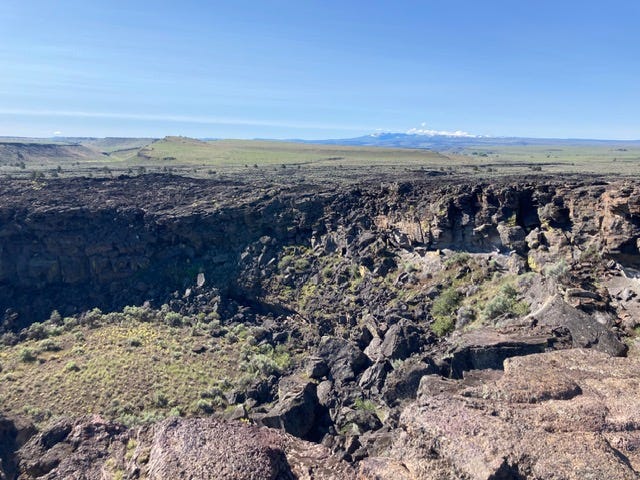
But while I love the high desert of Oregon, I also don’t know how I would live without the coast. Mossygoat Farm is about 25 miles inland and even that seems too far sometimes.
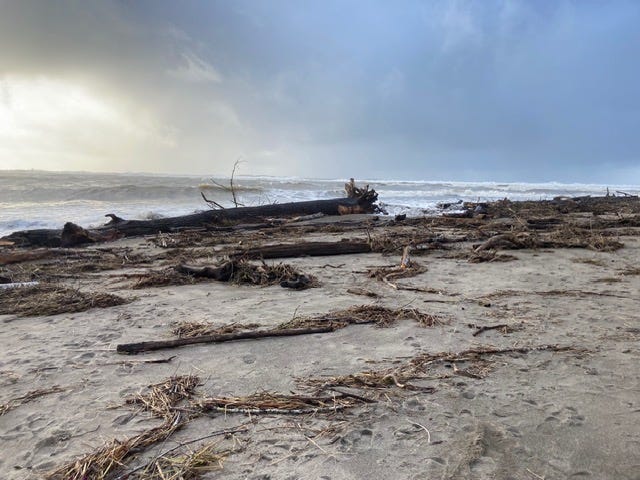
I am human and multi-faceted like the rest of us. This Substack is my wild story that I am sharing with the rest of you in case you find inspiration in any of my words.
Welcome to those on The Wild Path trying to find their own wild story. Subscribe to join in my story and if the words inspire you please consider buying me a cup of coffee. Thank you.
FWIW, I spoke out against MY college experience. I want to say that I am in no way anti-college. I was saddened to read on Substack a few weeks ago farmers that were saying no kid should go to college, even the ones interested in careers that require college degrees because there are other similar jobs they can get without degrees. There is a small anti-intellectualism undercurrent in homesteading and small farming that sometimes rears its ugly head. I am the parent of an Eastern Oregon University student. Yes, a state school, and I couldn’t be prouder. Everyone is on their own path. Some paths include college, some don’t. In the end I am happy that my path included college, my path just took many turns. I have one kid on the college path and one kid not and both are acceptable.