
What a $10 dairy steer can teach us about homeschooling

Hi friends, first off, I have to start with just mentioning that I am no longer a homeschool mom. This article was originally published at mossygoat.com in 2021. My formerly homeschooled children are now graduated and beginning their adult lives, but as a former homeschool mother, I have lessons to share from the adventures we had. This was the adventure in raising bummer steers.
Without further ado: what is real learning and what does a dying $10 dairy steer have to do with homeschooling?
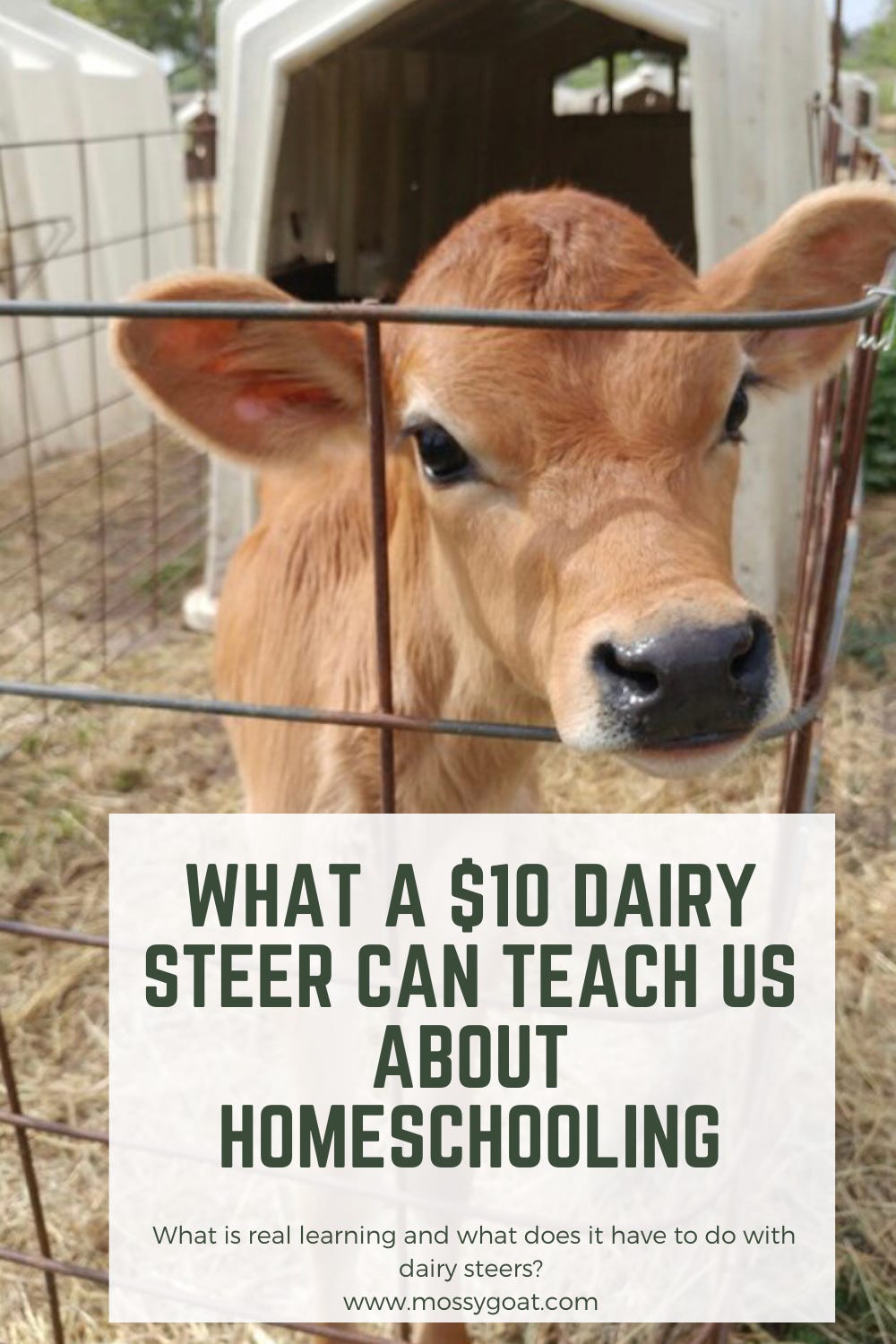
Bottle baby dairy steers often come from harsh confinement conditions. They are available in my area for as little as $10 each. This adventure started with the simple idea that we could bottle raise some cast-off steers and fill our freezer with meat, but what ensued was some pretty deep, life-long lessons.
Real learning is a buzz term in the homeschool world. But what does it look like? There are so many books out there about homeschooling: how to homeschool, how to plan curriculum, how to do nature study, how to raise wild children, and how to unschool. The list is endless. But what is real learning and how do we plan for it? Here is a hint: the answer is not in a book.
We are so devoted to our children, to the perfect homeschool plan, or to a homeschool lifestyle, that we forget to see the forest through the trees.
We homeschool our children to keep them wild and to give them the freedom to be themselves. But in the mire of nature studies and main lesson books, we lost our own wild. Homeschool moms easily are lost in a sea of dictation, copywork, and history timelines.
Where is your wild? Where is your real learning? How do you share real learning with your children?
It happens when you least expect it.
Life isn’t always magical. You aren’t always skipping down a nature path and doing poetry tea times. Sometimes life is raw.
Sometimes you are napping against your washing machine holding a dying bummer steer you bought for $10 and were planning on eating anyway. Let me tell you, that is the opposite of magical learning. There is no glamour in that. Especially considering that the calf died on a floor littered with signs of the valiant efforts made to save it: medicines, feeding tubes, syringes, and a dead calf. All in front of my dryer. But often learning doesn’t happen how we want it to.
In that moment my children learned veterinary medicine, the effects confinement dairying had on this days old calf, animal husbandry, as well as deep, deep lessons in compassion, caring, and empathy. The lessons were learned far better than if they had read about it in a book.
Real learning occurs in the raw moments of life:
Visiting a dying grandmother.
A mom and children eating Thanksgiving dinner alone in the Pig N’ Pancake.
Figuring out how to homeschool as a single parent when schools are shut down.
Having your family’s life turned upside due to pandemic job loss.
Real Learning happens in the happy moments as well.
Eating the first strawberry you grew yourself and discovering how different it tastes.
Swimming your first stroke in a river by yourself.
Watching your queen cat give birth.
Finding an injured animal and caring for it before you can get it to rehab.
That is real learning. You can’t plan for it, and you can’t read about it.
Don’t get caught up in what other people tell you real learning is. Real learning takes place caring for an ill calf, desperately trying to save its life. Real learning is not Waldorf, or Charlotte Mason, or radical unschooling. It is life catching you off guard.
Real learning occurs between the lines, during the in between moments of life. Real learning cannot be planned, it just happens. Our homeschool activities are just supplements to real learning. Nothing we plan will substitute.
Relax dear mom, if life catches you off guard and your homeschool isn’t Instagram perfect, your children are still learning. Take a deep breath and embrace real learning.
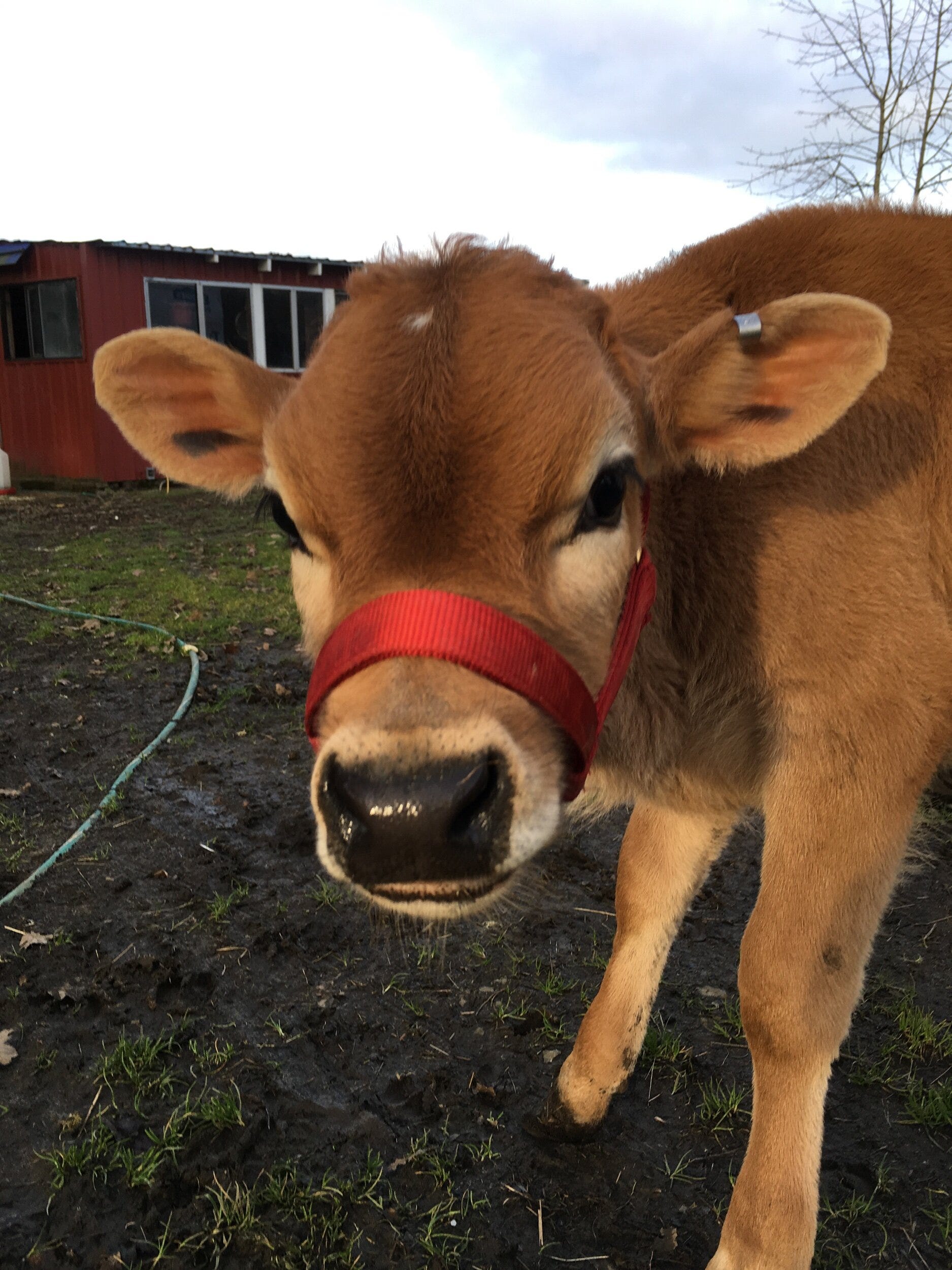
This is Bambi, another $10 Jersey Steer, he lived to a healthy age before visiting freezer camp. If you want a homestead tip on how to name animals that you are going to eat: don’t name them Bambi. We actually had to start calling him Bamburger to remind ourselves. Thank you Bamburger, we are grateful.
Thank you for reading The Wildstead Chronicles, if you found this helpful, please subscribe or consider buying me a coffee (or a bale of hay). Thank you!